
The May Group / University of Houston Chemistry
Advancing organic synthesis through innovative methods and natural product synthesis

The May Group at the University of Houston Department of Chemistry specializes in organic synthesis, with particular focus on natural product synthesis, medicinal chemistry, and methods development in electrophillic deboronation, organometallic ligand design, chiral diol organocatalysis, and carbene cascade reactions. Our research combines classical organic chemistry with modern synthetic strategies to solve complex chemical challenges.
Office: 5011 SERC
Lab: W5016A
Phone:
(832) 842-8808 office
(832) 842-8825 lab
Email: jmay@uh.edu
Twitter: @maylabuh
.gif)
Developing efficient synthetic routes to complex natural products using modern organic chemistry techniques and innovative strategies.
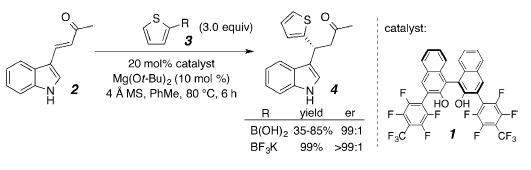
Creating new synthetic methodologies that enable more efficient, selective, and environmentally friendly organic transformations.
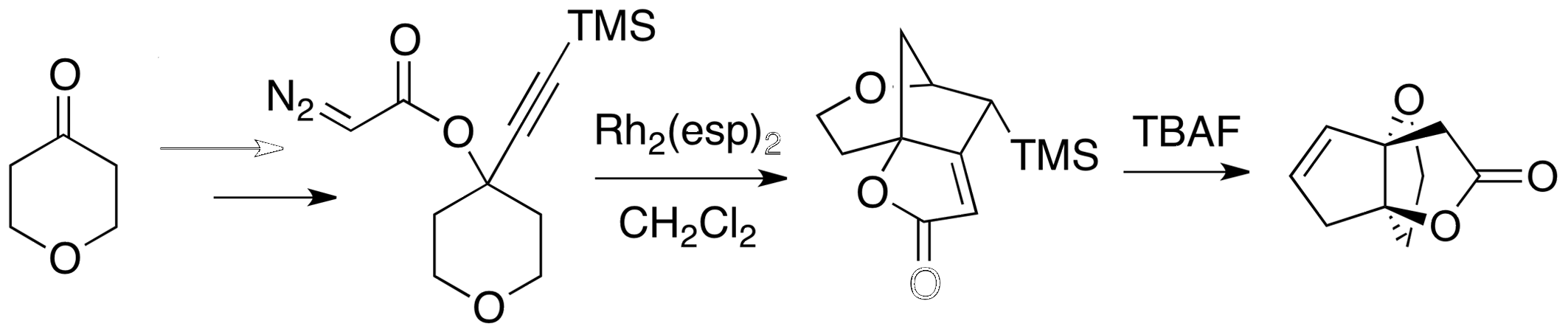
Exploiting cascade reactions and carbene chemistry to construct complex molecular architectures with elegant synthetic efficiency.
AJOC 2026, 15(3), e70370
View Details →Org. Lett. 2024, 26, 3778–3783.
View Details →Org. Lett. 2024, 26, 3397–3400
View Details →We are always interested in hearing from motivated students and postdoctoral researchers. If you are passionate about organic chemistry and interested in joining our research efforts, please contact Professor May.
Learn More